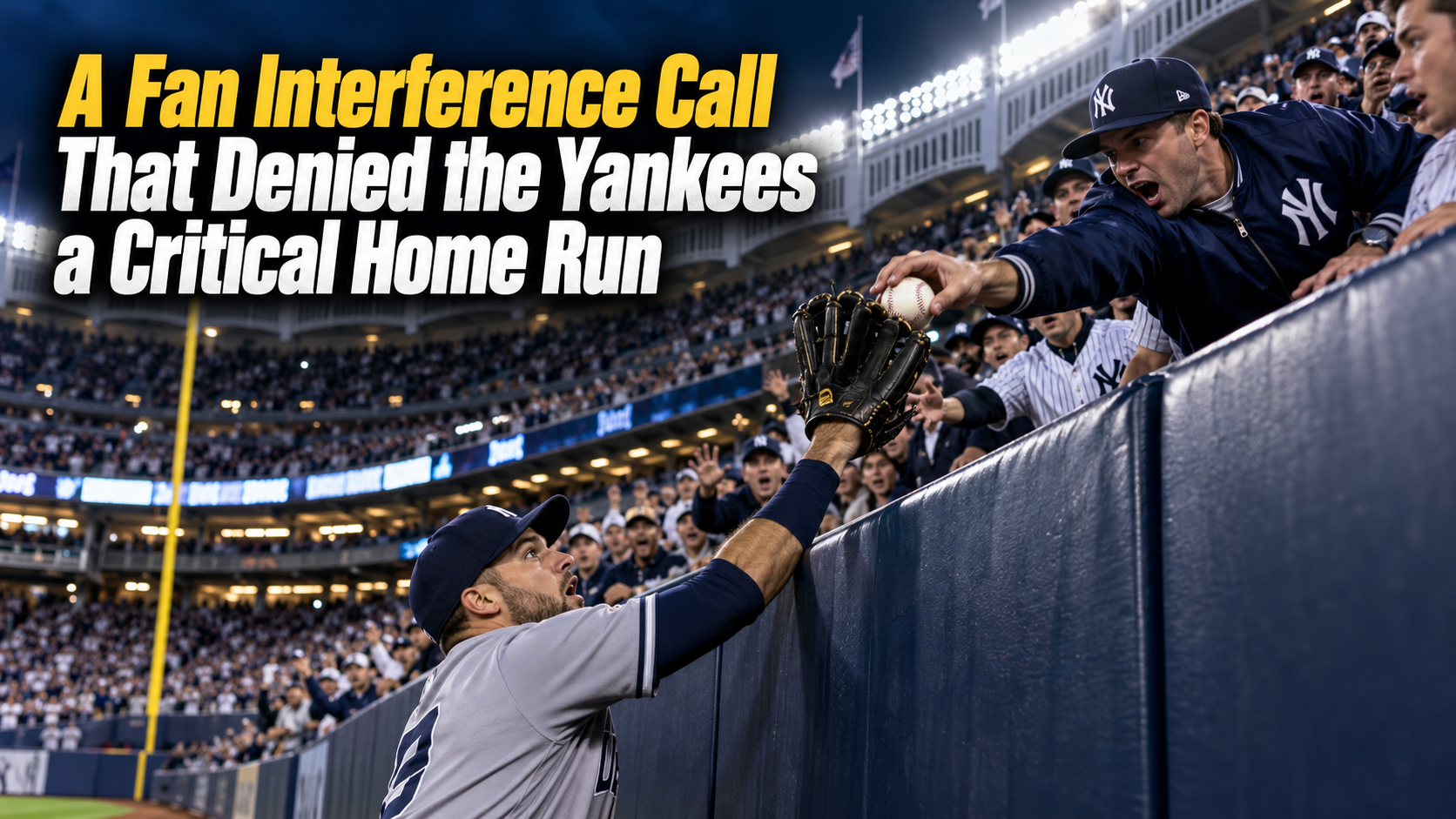
Baseball fans witnessed a pivotal moment during the American League Division Series when a controversial ruling changed the course of a playoff game at Yankee Stadium.
Where to Watch MLB Games
ESPN+

ESPN+
More live sports, more every day, all for less than cable.
Amazon Prime

Amazon Prime
A flexible streaming hub for major sports, live events, and add-on channels
FUBO

FUBO
The live sports streaming service built for fans who want it all
What appeared to be a game-tying home run by Anthony Volpe instead became a double after umpires determined that fan interference had occurred, leaving the Yankees trailing and ultimately ending their postseason run.
The decision reignited discussions about the role spectators play in determining outcomes at one of baseball’s most storied venues.
The Controversial Call That Changed Everything at Yankee Stadium
The sixth inning of Game 3 brought a moment that would define the entire series between the Yankees and the Rays. With George Lombard Jr. standing on first base, Anthony Volpe connected with a pitch that sent the ball soaring toward the left field wall.
The crowd erupted as the ball appeared to clear the fence, seemingly tying the game at four runs apiece and breathing new life into the Yankees’ playoff hopes.
However, the celebration proved premature as Rays left fielder Victor Mesa Jr. immediately signaled to the umpires that something had gone wrong.
His appeal set in motion a review process that would ultimately alter the trajectory of the game. The stadium atmosphere shifted from jubilation to uncertainty as officials huddled to examine what had actually transpired at the wall.
The stakes could not have been higher for both teams in this decisive playoff matchup. Tampa Bay held a precarious 4-3 lead, and the Yankees desperately needed momentum to avoid elimination from the postseason.
Every run mattered in a series that had already proven to be tightly contested, making the upcoming ruling all the more consequential for both clubhouses and their fans.
What Really Happened When the Ball Left Volpe’s Bat

The replay footage revealed a scene that has become all too familiar at Yankee Stadium over the decades.
A spectator wearing a navy blue Yankees jacket had extended his reach beyond the boundary of the playing field, making contact with the baseball before it could complete its natural trajectory. The fan’s actions occurred at a critical juncture, interfering with what should have been a straightforward play for the Rays defense.
The Rays outfielder, who had appeared in 81 games during the season and tracked 124 fly balls, believed he had a legitimate chance to make a play on the ball, though the exact outcome without interference remained a matter of interpretation.
The positioning of both the fan and the fielder created a complex situation that required careful examination by the officiating crew.
MLB’s replay center in New York took on the responsibility of making the final determination.
Their analysis had to account for multiple factors, including where the ball would have landed without interference and whether Mesa could have successfully fielded it.
The technology available to modern baseball allowed officials to scrutinize every frame of the incident, though the human element of judgment still played a crucial role in the final verdict.
Why the Umpires’ Decision Sparked Immediate Debate
The ruling that emerged from the review process satisfied neither team completely while attempting to balance competing considerations. Officials determined that while fan interference had undeniably occurred, Mesa would not have been able to catch the ball even without the spectator’s involvement.
This nuanced judgment led to a split decision that awarded Lombard the run for crossing home plate but limited Volpe to a double rather than a home run.
The complexity of the call highlighted the challenges umpires face when fan interference enters the equation.
Unlike clear-cut plays where the ball either crosses the fence or remains in play, this situation required officials to hypothesize about what would have happened in an alternate scenario. The decision-making process involved evaluating the ball’s trajectory, the fielder’s position, and the timing of the fan’s interference.
For Yankees supporters in attendance, the ruling felt like a missed opportunity that could have shifted momentum in their favor. The difference between a tie game and continuing to trail by one run carried enormous psychological weight in a playoff atmosphere.
Where to Watch MLB Games
ESPN+
ESPN+
More live sports, more every day, all for less than cable.
Amazon Prime
Amazon Prime
A flexible streaming hub for major sports, live events, and add-on channels
FUBO
FUBO
The live sports streaming service built for fans who want it all
Meanwhile, the Rays maintained their slim advantage, though the controversy added tension to the remaining innings as both teams understood how fragile their positions had become.
The Ruling That Sealed the Yankees’ Fate—And What It Means
Tampa Bay’s 4-3 lead held through the final innings, with the Rays defense preventing any further scoring threats from materializing.
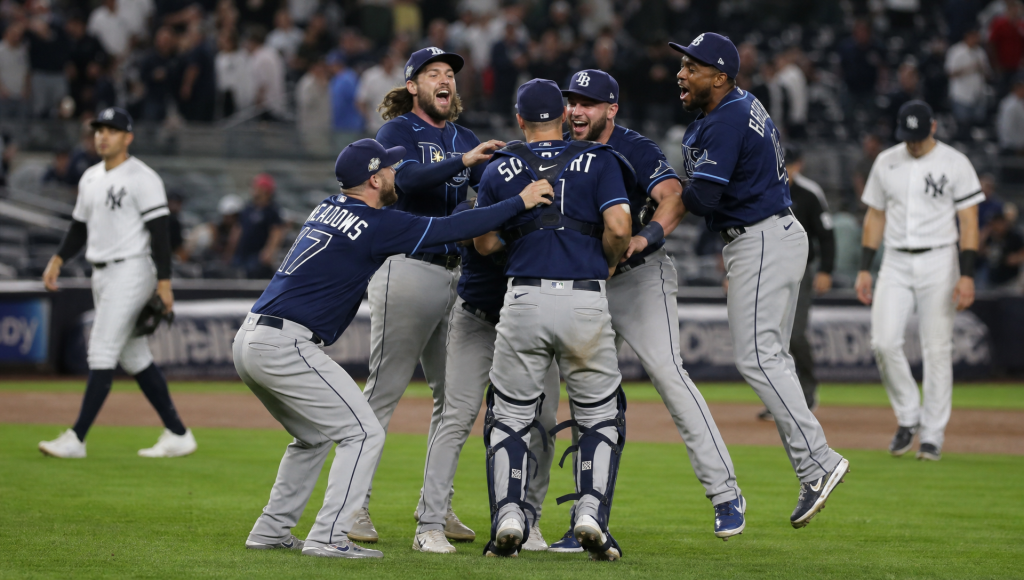
The victory completed a sweep of the best-of-five series, sending Tampa Bay forward to the American League Championship Series while ending New York’s season in disappointing fashion. The fan interference call, while not the sole factor in the outcome, remained a focal point of post-game analysis and discussion.
The incident served as a reminder of how quickly playoff fortunes can shift based on circumstances beyond the players’ control.
Had Volpe, who had accumulated 94 fly balls across 71 games during the season, been credited with a home run, the Yankees would have entered the later innings with renewed confidence and the pressure squarely on Tampa Bay’s shoulders. Instead, they faced the challenge of trying to generate offense against a Rays pitching staff that had proven effective throughout the series.
For the organization and its supporters, the loss represented another chapter in a season that had promised more than it ultimately delivered. The manner of elimination, with controversy surrounding a pivotal call, added a layer of frustration to what was already a bitter conclusion.
Meanwhile, Tampa Bay advanced with the knowledge that they had navigated a challenging situation and emerged victorious despite the complications that arose during the game.
From Maier to 2024: When Yankee Stadium Fans Cross the Line
The latest fan interference incident inevitably drew comparisons to one of the most famous examples in Yankees playoff history.
During the 1996 American League Division Series, a young fan named Jeffrey Maier reached over the right field wall and deflected a Derek Jeter fly ball that Orioles outfielder Tony Tarasco appeared positioned to catch. That play was ruled a home run, benefiting the Yankees and contributing to their eventual championship run.
The contrast between the two incidents highlights how replay technology has changed the game’s administration. In 1996, umpires made their call in real time without the benefit of video review, and the decision stood despite Baltimore’s protests.
Nearly three decades later, officials have access to multiple camera angles and sophisticated analysis tools that allow for more informed rulings, though controversy still follows these moments.
Yankee Stadium’s configuration and passionate fan base create an environment where such incidents remain possible despite increased awareness and security measures.
The proximity of seats to the field of play, particularly in the outfield areas, means that enthusiastic spectators can impact games if they extend beyond the boundaries.
These recurring situations raise ongoing questions about ballpark design, fan conduct policies, and the balance between creating an intimate atmosphere and maintaining the integrity of competition on the field.
Where to Watch MLB Games
ESPN+
ESPN+
More live sports, more every day, all for less than cable.
Amazon Prime
Amazon Prime
A flexible streaming hub for major sports, live events, and add-on channels
FUBO
FUBO
The live sports streaming service built for fans who want it all